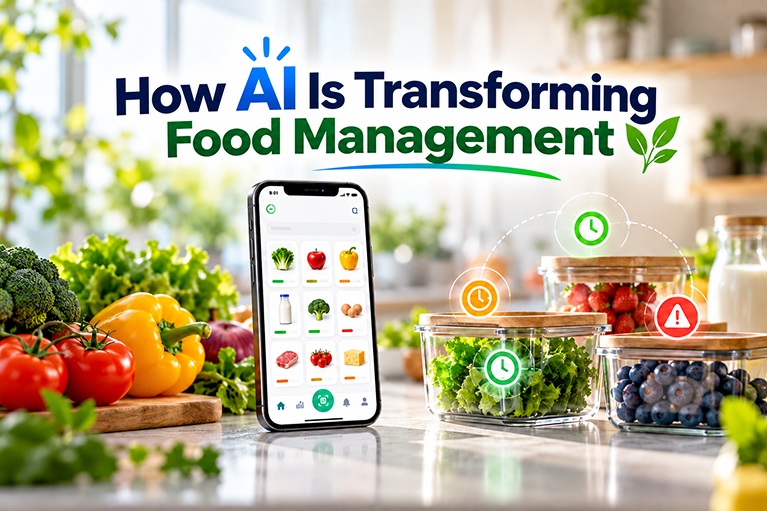


Food waste is a growing challenge for households around the world. Every year, families throw away significant amounts of food due to forgotten ingredients, expired products, poor meal planning, and overbuying. Beyond the financial cost, food waste also contributes to environmental issues such as increased greenhouse gas emissions and unnecessary resource consumption.
Artificial Intelligence is emerging as a powerful solution to help households manage food more efficiently. By combining smart inventory tracking, freshness prediction, meal recommendations, and waste reduction insights, AI-powered platforms are transforming how families shop, store, and consume food.
The Growing Problem of Household Food Waste
Many households struggle to keep track of what is stored in their refrigerators and pantries.
As a result, food often expires before it can be used. Fresh produce, dairy products, and prepared meals are among the most commonly wasted items. This not only increases grocery expenses but also contributes to unnecessary environmental impact.
Smart technology is helping families gain better visibility into their food inventory and consumption habits.
AI-Powered Food Recognition and Tracking
One of the most innovative features of modern food management platforms is AI-powered food recognition.
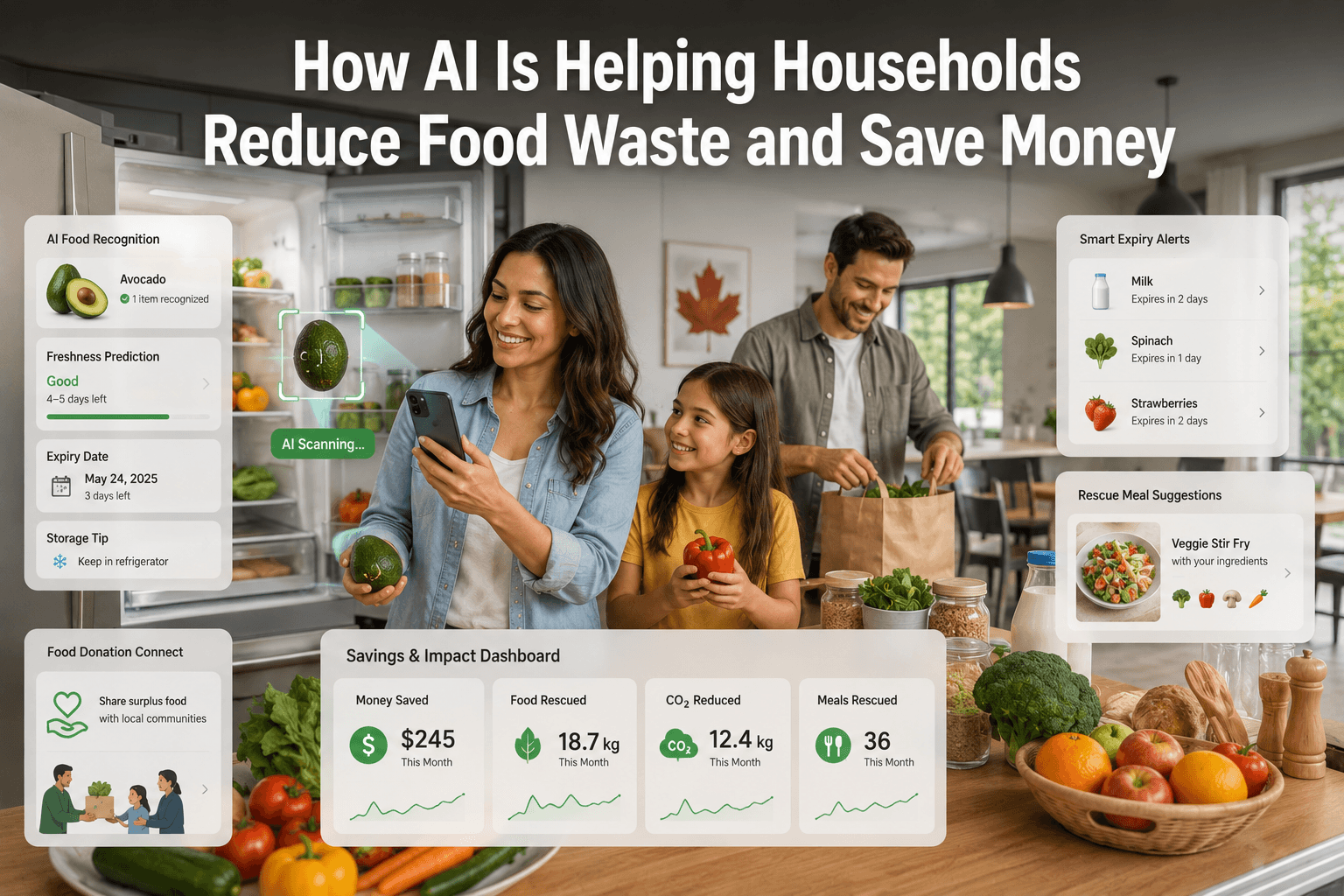
Using smartphone cameras and image recognition technology, AI can identify food items, record inventory automatically, and track expiration dates. This eliminates manual tracking and helps users stay informed about what they already have at home.
Better inventory visibility reduces duplicate purchases and unnecessary waste.
Predicting Freshness and Expiration Dates
AI systems can analyze food types, storage conditions, and historical data to predict freshness more accurately.
Instead of discovering spoiled food too late, households receive alerts when products are approaching expiration. These notifications encourage timely consumption and help families prioritize ingredients that should be used first.
Freshness prediction supports smarter food management and better meal planning.
Personalized Meal Recommendations
One of the most practical ways AI reduces food waste is through intelligent meal suggestions.
By analyzing available ingredients, AI can recommend recipes that utilize items already stored at home. These "rescue meal" suggestions help families prepare meals using ingredients that might otherwise go unused.
This approach reduces waste while simplifying daily meal decisions.
Helping Families Save Money
Reducing food waste directly impacts household budgets.
When families purchase only what they need and consume food before it expires, grocery spending becomes more efficient. AI-driven insights help users identify purchasing patterns, reduce unnecessary spending, and maximize the value of every grocery trip.
Small improvements in food management can lead to substantial savings over time.
Supporting Sustainability Goals
Food waste has a significant environmental impact.
Producing, transporting, and disposing of wasted food consumes energy, water, and other valuable resources. AI-powered food management solutions help reduce waste at the household level, contributing to lower carbon emissions and more sustainable consumption habits.
Every meal saved supports a healthier planet.
Building Smarter Food Habits
Beyond technology, AI encourages long-term behavioral change.
By providing personalized insights, consumption trends, and waste reports, users become more aware of their food habits. This awareness helps families develop smarter shopping, storage, and meal-planning routines that minimize waste and improve efficiency.
The result is a more organized and sustainable kitchen.
The Future of AI in Food Management
As Artificial Intelligence continues to evolve, food management platforms will become even more intelligent.
Future innovations may include automated pantry monitoring, advanced grocery recommendations, predictive shopping lists, and community food-sharing networks. These technologies will further empower households to reduce waste, save money, and make more sustainable choices.
Final Thoughts
AI is transforming how households manage food by providing smarter ways to track inventory, predict freshness, plan meals, and reduce waste.
Through intelligent automation and actionable insights, families can save money, minimize environmental impact, and create more sustainable food habits. FreshWise is helping lead this transformation by delivering innovative AI-powered solutions that make food management easier, more efficient, and more environmentally responsible.